Ported or Sealed Cabinets: Matching the Design to the Room
 Cynthia Kuder
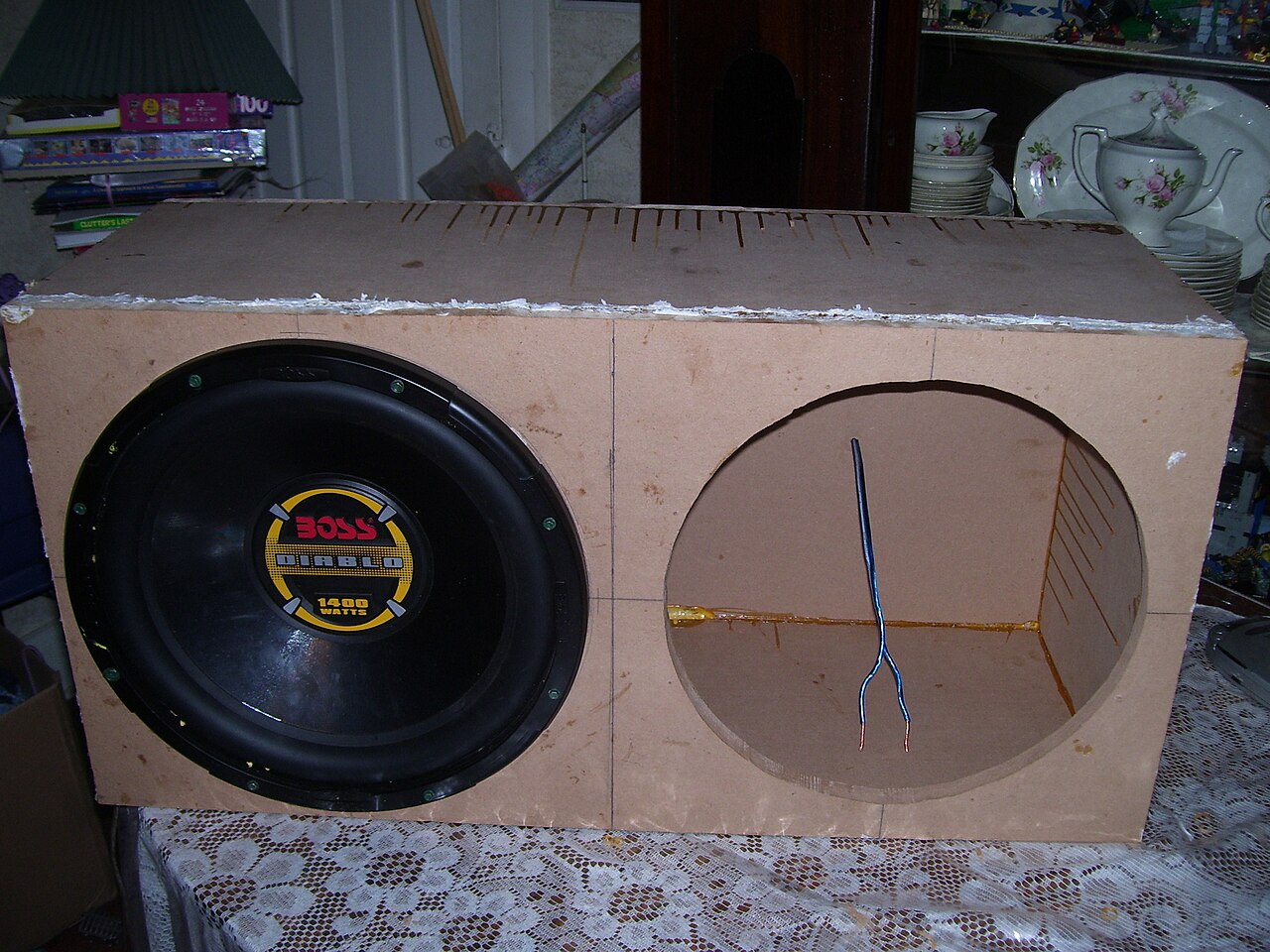
Choose sealed for predictable placement and ported for output per litre, and let the room decide which advantage matters. The cabinet type sets the shape of the low-frequency roll-off, and that shape interacts with room gain in a way that is often more important than the driver used.
Two ways to extend the low end
A sealed cabinet traps air behind the driver. The trapped air acts as a spring and the response rolls off at 12 dB per octave below the system resonance.
A ported cabinet uses a tuned opening to add output near the tuning frequency. The port radiates the rear wave in phase with the front, which extends the bass for the same driver and box size.
Below the tuning frequency the port unloads the driver quickly, and the roll-off steepens to 24 dB per octave. That steepness is the main risk of the design.
What each design does well
Ported designs deliver more output in the 40 to 80 Hz region for a given cabinet volume, which is why most small bookshelf speakers use a port. They also tend to be more sensitive at low frequencies, which reduces the amplifier requirement.
Sealed designs roll off gently and predictably. Their group delay is lower, which listeners often describe as tighter or more controlled bass, particularly on acoustic instruments.
Sealed cabinets are also more forgiving of placement. Because the roll-off is gradual, adding room gain near a wall does not produce the same single-frequency bump that a port can.
What each design costs
The port introduces a resonance of its own, and if it is poorly damped it produces a chuffing noise at high levels and a narrow peak near the tuning frequency.
The port also radiates midrange leakage from inside the cabinet. Many designs accept this, and some add a foam plug or a resistive port to reduce it.
Sealed designs cost efficiency and low-frequency extension. To match a ported cabinet at 50 Hz, a sealed cabinet usually needs a larger box, a more capable driver or considerably more amplifier power.
Interaction with room gain
Room gain reinforces the low end below roughly 100 Hz. A ported speaker with output that already peaks near its tuning frequency can end up with a boomy, one-note bass character in a small room.
A sealed speaker with a gentle roll-off adds to room gain more gracefully, because there is no narrow peak to be amplified.
That is the practical reason small rooms often favour sealed designs and large rooms often favour ported ones. It is not about quality, it is about how the roll-off adds to the room’s own reinforcement.
The port can sometimes be plugged
A removable foam plug converts a ported speaker into an approximate sealed one. It reduces the bass level and tightens the response, which is a useful experiment when a room is boomy.
Plugging the port also changes the system tuning and can slightly reduce power handling below the original tuning frequency, because the driver no longer has the port’s unloading behaviour. Moderate levels are fine; very high levels are not.
Some manufacturers supply a plug and a recommended configuration for close-to-wall placement. That is a straightforward way to have both behaviours from one cabinet.
Placement differences
Ported cabinets need space behind and, on rear-ported designs, to the sides. A rear port a few centimetres from a wall behaves like a different speaker entirely, with a strong peak near the tuning frequency.
Front-ported designs are more tolerant of close placement and are the usual choice for shelves and desks, at the cost of some midrange leakage through the port.
Sealed cabinets can sit closer to walls without the same penalty, which is often decisive in a small room where space is the binding constraint.
Choosing
If the room is small and the speakers will sit near a wall, sealed or front-ported with a plug is the safer choice. If the room is larger and the speakers can stand free, a ported design gives more bass for the money.
Listen to the same recording on both types in a similar room if possible. The difference is not in how low the bass goes, but in how evenly it goes low.
What to check before buying
Read the stated low-frequency limit and the tolerance, because a figure of 45 Hz at minus 6 dB is not the same as 45 Hz at minus 3 dB. Also look for the port tuning if it is published, and compare it with the room modes you have measured.
A speaker whose port is tuned to a frequency your room already reinforces will sound worse than a speaker with less extension and a cleaner roll-off.