How to Match Headphone Impedance and Sensitivity to Your Source
 Cynthia Kuder
Match the impedance first, then read the sensitivity, and most source problems are settled before you spend anything. Impedance sets how much current the amplifier has to deliver; sensitivity sets how loud the headphone plays from a given voltage. Those two figures, taken together, predict whether a phone, a laptop or a separate amplifier will drive a pair properly.
Why the two figures are read together
Impedance on its own says very little. A 300-ohm headphone and a 32-ohm headphone can both be easy loads if their sensitivity is high enough. What changes is the shape of the demand: low impedance asks for current, high impedance asks for voltage.
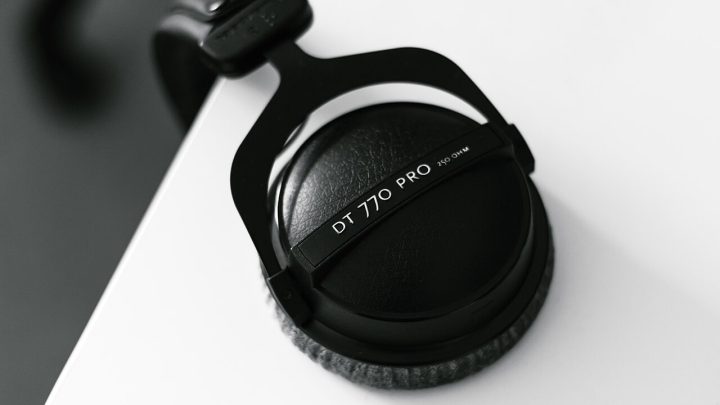
Small portable devices rarely have much voltage headroom. They often manage current reasonably well because their output stage was designed for low-impedance earbuds. That is why a 32-ohm pair at 105 dB/mW plays loudly from a phone, while a 300-ohm pair at 97 dB/mW sounds thin and quiet from the same socket.
Convert sensitivity into something comparable
Sensitivity is quoted either in dB per milliwatt or dB per volt, and mixing the two units is the most common reason two spec sheets appear to contradict each other.
For a 32-ohm load, 1 mW is roughly 0.18 volts. For a 300-ohm load, 1 mW is roughly 0.55 volts. So a headphone rated 100 dB/mW at 32 ohms is considerably louder per volt than one rated 100 dB/mW at 300 ohms. Convert both to dB/V before comparing, or only compare units whose impedances are close.
A working threshold is 110 dB/V for portable use and 100 dB/V for a desktop amplifier. Below that, expect to run the volume near maximum on a phone.
Test the source you already own
Play a tone at a normal level through your current setup and note where the volume control sits. If a track mastered at a sensible level already needs 85 percent of the range, a harder load will not improve matters.
Then listen for two symptoms as you raise the level. Bass that thins out as the volume climbs points to voltage limiting. A noise floor that becomes audible before the music gets loud points to an amplifier with high gain and a high noise floor.
If neither appears with your present pair, an upgrade at similar impedance and sensitivity will also be fine. If either appears, the amplifier is the part to change.
Match the amplifier to the load
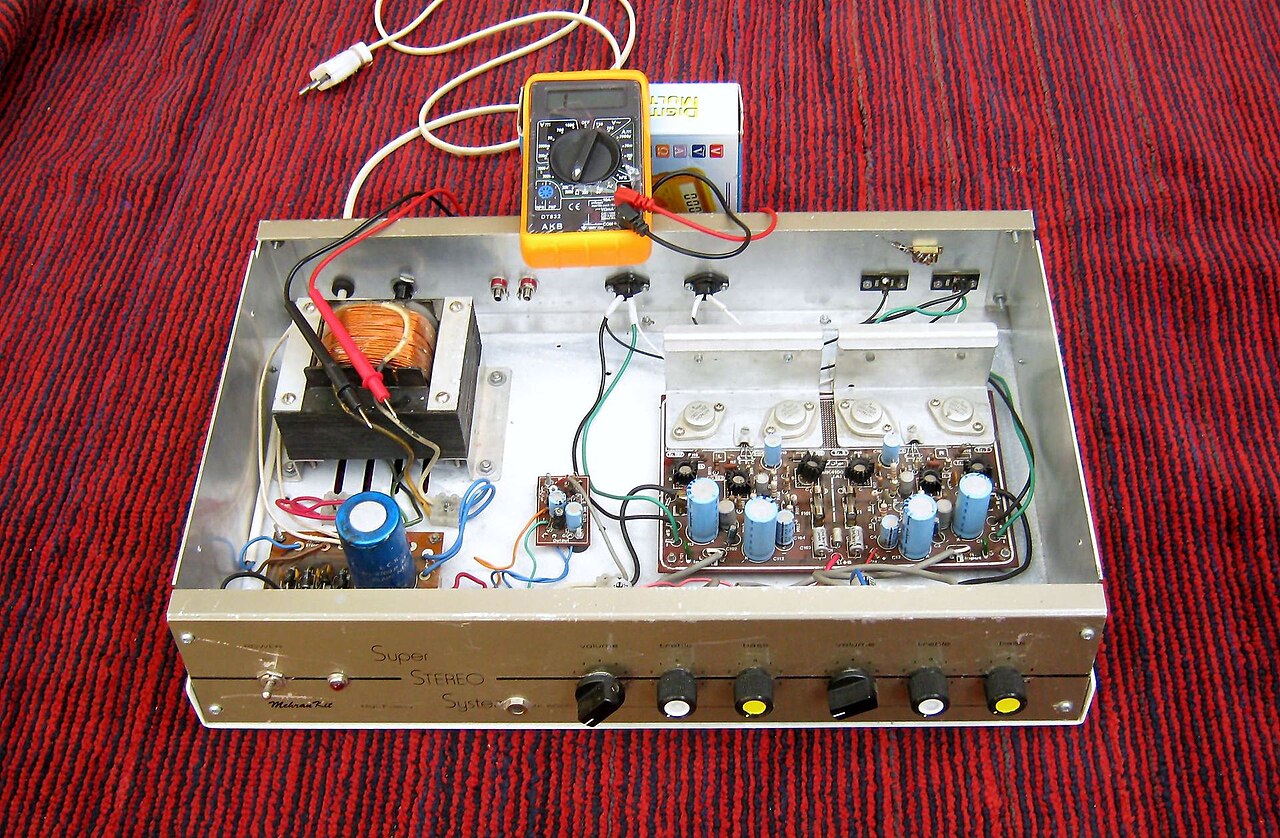
An amplifier has three jobs: deliver enough voltage into your headphone’s impedance, hold a low output impedance, and stay quiet. Output impedance should sit below one eighth of the nominal headphone impedance so the response is not reshaped.
A 32-ohm headphone wants an output impedance under 4 ohms. A 300-ohm headphone tolerates 30 ohms or more without a measurable shift.
Power is quoted at a stated load, so a rating of 500 mW into 32 ohms says nothing about 300 ohms unless the manufacturer also publishes that column. Where only one column appears, treat the other as unknown rather than assumed.
For high-impedance dynamic headphones, a desktop amplifier with a 10 to 20 volt swing covers nearly every case. For low-impedance planar headphones, look for current delivery and a low noise floor rather than a large voltage number.
Portable and desktop behave differently
A phone with a dongle is limited by the dongle more than by the phone. Many adapters deliver around 0.5 volts, enough for sensitive in-ears and marginal for full-size headphones.
A laptop jack is usually better than expected into 32 to 60 ohms and noticeably worse above 150 ohms, mostly because of a higher output impedance and a modest supply rail.
A desktop amplifier removes both limits at the cost of a cable and a wall socket. At a desk that trade is usually worth making. While moving, it usually is not.
What to do with the numbers
Write down impedance, sensitivity and the volume position your source needs. Resist the pull of a single review.
If the impedance is above 150 ohms and the sensitivity is under 100 dB/mW, plan for a desktop amplifier. If the impedance is under 50 ohms and the sensitivity is above 100 dB/mW, plan for nothing at all. Everything between those positions is decided by how much noise your socket makes and how loudly you listen.