Recording Voice at Home: Distance, Off-Axis Response and Room Tone
 Cynthia Kuder
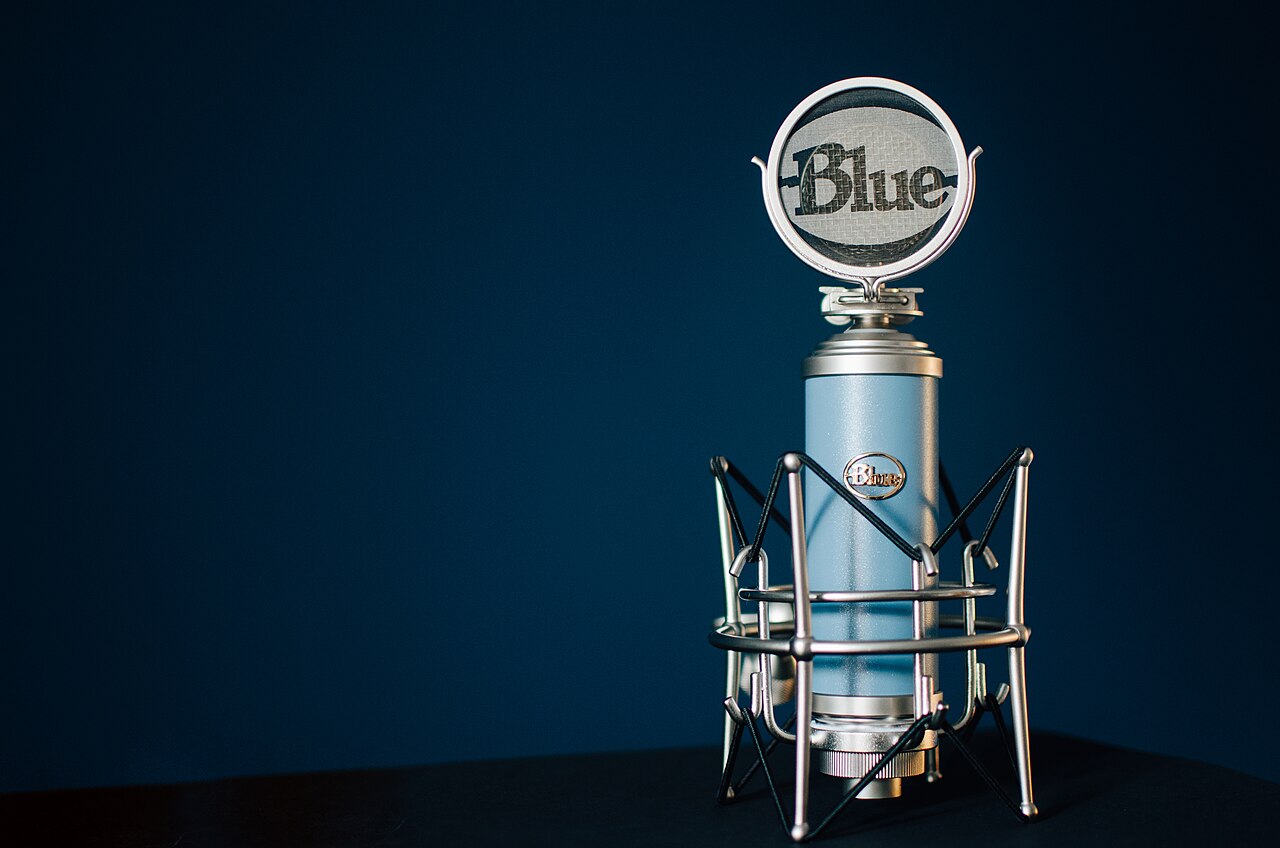
Control the distance and the angle before you spend anything on the microphone, because those two choices decide how much room ends up in the recording. A home room is rarely the problem; the way the microphone is used in it usually is.
Distance sets the ratio
The direct sound falls off with distance while the room’s reflections do not. Moving closer therefore raises the direct sound relative to the room.
At 20 centimetres the direct sound dominates and the voice sounds close and present. At 60 centimetres the room contributes noticeably and the voice moves back in the image.
For most home rooms, 15 to 25 centimetres is the usable range. Closer than that produces proximity effect, a rise in the low end caused by the directional nature of the microphone’s capsule.
Angle and off-axis response
Pointing the microphone slightly off-axis reduces sibilance and harshness without the losses that equalisation introduces.
Most large-diaphragm condensers have a directionality that varies across the frequency range, so the angle changes the balance as well as the level.
A 15 to 30 degree offset is a useful starting point. Record the same phrase at three angles and compare; the effect is usually clearer than any equaliser setting.
The pop filter and plosives
Plosives are bursts of low-frequency energy from plosive consonants. A pop filter placed two finger-widths from the capsule breaks up the airflow without affecting the tone.
Positioning the microphone slightly above the mouth achieves a similar result, because the airflow from a plosive travels mostly forward.
A damaged pop filter is worse than none, since a torn screen produces its own noise on loud consonants.
Room tone and how to reduce it
Rooms contribute reflections, resonances and ambient noise. The first two can be managed with soft furnishings and an irregular layout; the third requires silence.
Record thirty seconds of silence at your normal gain and listen to it. Fans, hard drives, refrigeration and street noise all appear, and each one adds a layer that cannot be removed later.
Choose the quietest time of day and turn off what can be turned off. A recording made at midnight in a bedroom is often cleaner than one made in a treated studio with the air conditioning running.
Reflection control without treatment
Record with the microphone at least a metre from the nearest wall, and avoid pointing the rear of a cardioid microphone at a reflective surface.
Standing in a corner is the worst position, because two walls and the ceiling all reflect into the microphone within a short delay.
A heavy blanket behind the performer reduces the reflection from the wall the voice is facing. It is not treatment, but it changes the recording more than most microphone upgrades in a small room.
Compression and dynamic control
Record without compression where possible, and control the dynamics with distance and technique instead. A performer who moves back on loud passages and closer on quiet ones produces a more even take than a compressor set to rescue it.
Where compression is needed, apply it lightly while tracking and more heavily during mixing. Committing to heavy compression at the recording stage removes options later.
Watch the peak level rather than the average. A vocal that peaks at minus 12 dBFS leaves room for the occasional loud phrase without clipping.
Testing a take
Listen on headphones immediately and then on a phone speaker. The phone reveals room tone, sibilance and balance problems more clearly than any studio monitor.
Then listen to the silence between phrases. Any audible room in the gaps will be present underneath the voice, and the fix is distance, angle or a quieter time of day.
What matters least
The microphone’s price matters less than its placement, and the interface matters less than both. A well-placed modest microphone in a quiet room produces a better vocal recording than an expensive one used badly.
Working with the room you have
Where no quiet room exists, record in the largest room and at the quietest hour. A larger volume gives the reflections longer to decay, and the extra distance weakens them.
Record a thirty-second room-tone sample at the start of every session. Having the room’s noise available separately makes it possible to judge later whether a problem came from the room or from the performance.